
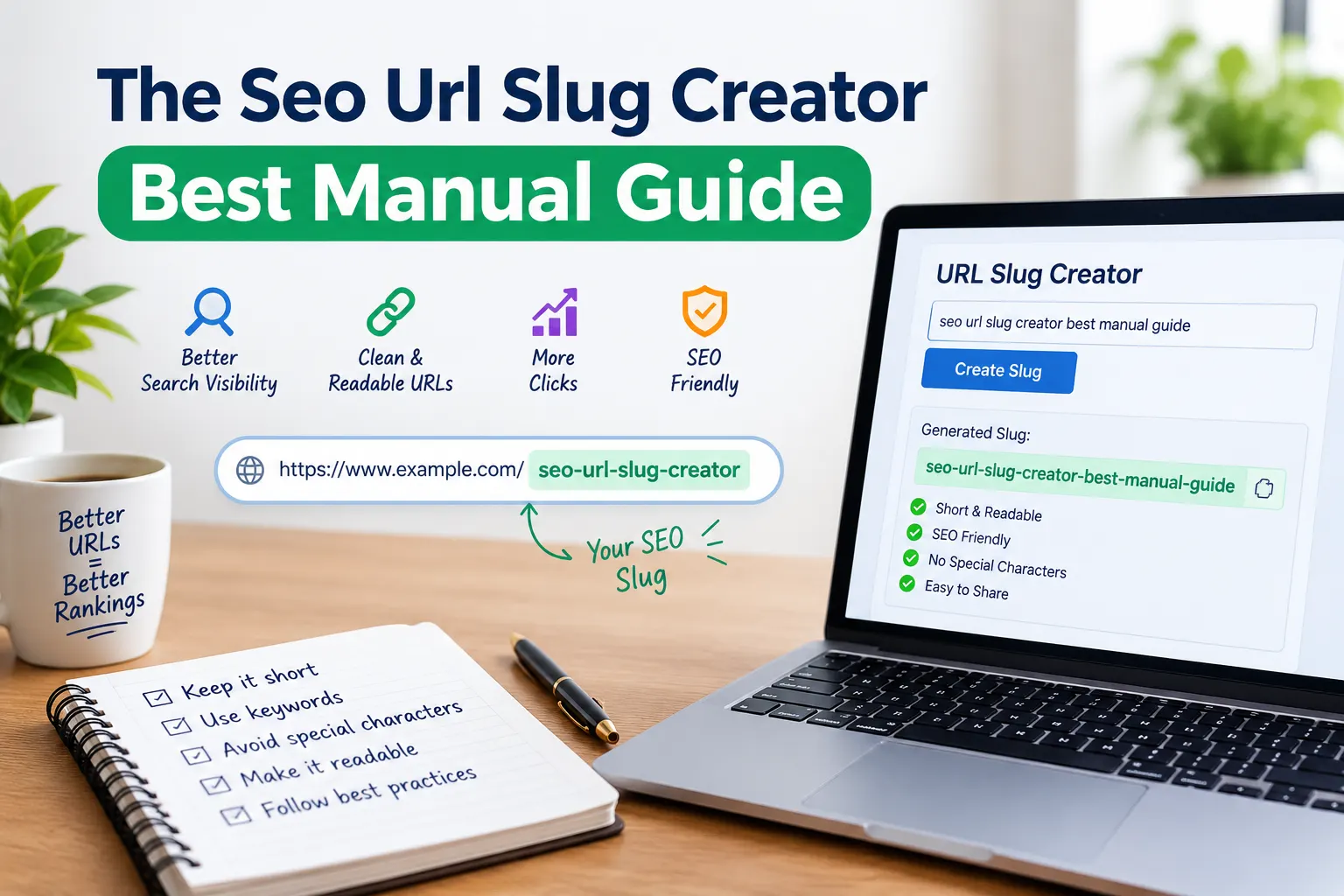
The Seo Url Slug Creator Best Manual Guide
Introduction to Search Engine Permalink Frameworks and Site Crawlability
Search engine index crawlers rely heavily on search‑friendly URLs to understand what a web page is about. Clean URLs are essential for search engine understanding. Long messy URLs filled with parameters tracking codes or special characters confuse search bots and lower your organic visibility. Converting titles into clean low‑hyphen alphanumeric slugs improves your site structure and makes links easier to read for users supporting good technical search performance.
Many digital marketers, independent bloggers and software developers treat URL directory strings as an afterthought. They let content management systems auto‑generate tracking numbers, query variables or uppercase string fragments. This lack of structure can hurt your search engine optimization metrics. Cluttered pathways increase indexing friction. Look suspicious, on search engine results pages. When a user or crawl spider sees a non‑semantic link, click‑through rates decline and your overall organic keyword relevance drops.
Shifting your publishing workflow to a localized rule‑based web link sanitization framework changes the game for your site indexation. Using automated front‑end link formatting lets technical teams build semantic permalinks inside their browser instantly. This ensures website directories boosts indexing efficiency across major search systems increases clicks and helps your digital platforms build good search presence sustainably.
What to Do. The Strategic Permalink Standardization Plan for Webmasters
To manage your web routing directories effectively and protect your content from search indexing delays or messy permalink structures across web servers you must treat your raw page titles as structured data strings that need careful tracking. Before building category architectures uploading blog articles or organizing e-commerce product lines implement this comprehensive webmaster strategy:
First clean your text titles of any emotional or conversational filler words before running transformation codes. Isolate your primary target focus keywords from language parameters like pronouns, unnecessary conjunctions or repetitive prepositions. Grouping stop words inside your link strings dilutes your keyword relevance and increases path complexity for crawl spiders.
Second establish alphanumeric formatting limits for each layer of your web address structure. Keep your individual page slugs concise, semantic and written entirely in clean lowercase parameters. Avoid using capital letters or illegal symbol strings inside your web link configurations keeping your site directory lines uniform, trustworthy and stable across all web server environments.
Third run real-time string validation updates across your link directories before taking any web page live. Do not wait until links are cached by search bots to verify if a path structure is broken or confusing. Fixing directory capitalization and character settings during the drafting phase prevents redirects and speeds up your site crawl budgets.
Fourth keep your unreleased article titles, strategic landing schedules and confidential target keywords safe from external tracking scripts. When formatting raw title case lines avoid using third-party web portals that log your website inputs into centralized databases.
Fifth use browser-based slug creators to parse link text instantly inside your workflow. Having access, to clean lowercase hyphenated slug paths lets development teams clean up directory links confidently remove manual editing steps and maintain high permalink standards throughout your site architecture.
How It Works. The Technical Logic of Regular Expression Text Filtering
The automated permalink creator works by taking text titles and running them through specialized regex filtering strings. This process turns text lines into clean web‑safe permalink strings right inside your browser memory canvas. At the core the code performs three filtering operations. First the code changes all letters to lowercase. Second the code removes character blocks. Third the code replaces all spaces with a single uniform hyphen.
The processing architecture handles permalink transformations by taking your input title string and applying JavaScript regular expression sequences. When the action button is pressed the code trims trailing white spaces from the outer boundaries removes special symbols matches internal text breaks and swaps variable spaces for a clean low‑hyphen alphanumeric slug. Because this entire process runs inside your browser client‑side memory using vanilla JavaScript, your unreleased headlines or corporate schedules remain 100 % confidential and safe from remote server logging.
The Underlying Mathematical/Algorithmic Regex Array:
- Lowercase Conversion: input text is transformed via native lowercase properties
- Character Stripping: special characters are removed via alphanumeric exclusion rules
- Whitespace Mapping: internal white spaces and multiple hyphens are replaced by hyphens
When you click the button the script instantly runs these text matching patterns across your title cleaning up your string variables in real time. This automated client‑side processing removes calculation lag protects your content strategies and delivers highly reliable web directory pathways instantly.
How to Use. Step‑by‑Step Instructions for the Permalink Console
Navigating the responsive SEO URL slug creator console takes only a few seconds and requires absolutely no technical web development or software programming experience. Follow this step‑by‑step framework to build clean crawlable web links instantly:
Step 1: Locate the primary data input field box on the console panel, which is dedicated to your raw article title text. Click inside this field slot to activate the processing container.
Step 2: Type or paste your page headline, target keyword phrase or blog title directly into the box block (for example if your raw title is “Kam Interest Rate Par Loan Kaise Milega” simply enter that text).
Step 3: Click the blue button labeled “Build Structural Slug.” The local client‑side script processes your parameters within your browser memory cache converting the text and displaying your clean URL string in the output panel.
Step 4: Copy the resulting lowercase, hyphen‑separated string, from the output window and paste it directly into your CMS permalink configuration panel. If you want to check a headline or test alternative link structures clear the field input new text and click the action button again to see the results refresh immediately.